Category: News

  • AI in Higher Education: Insights from the INFINITE Research in Cyprus

    AI in Higher Education: Insights from the INFINITE Research in Cyprus

    AI in Higher Education: Preparing Students for the Jobs of Tomorrow

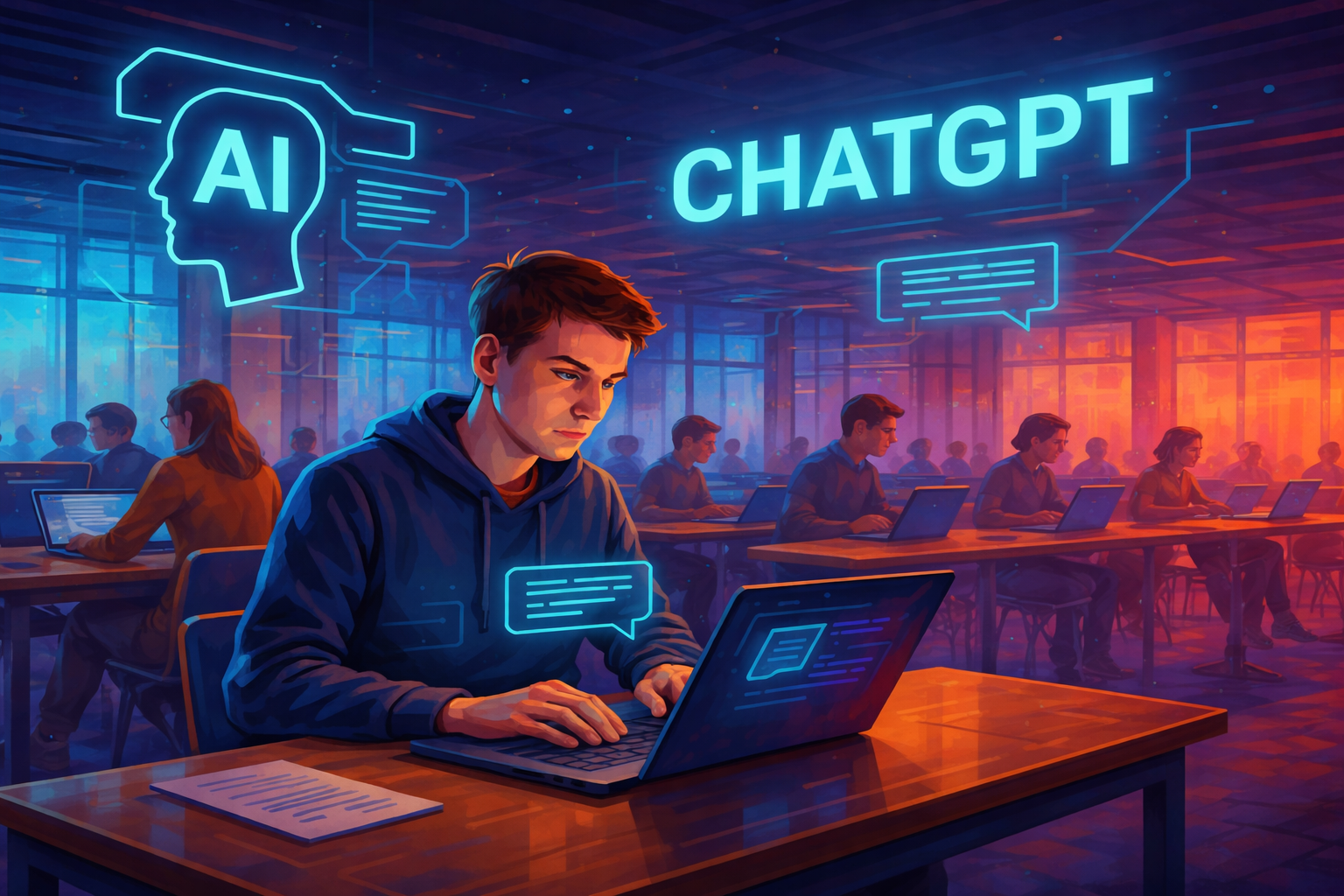
    As artificial intelligence (AI) continues to reshape industries worldwide, higher education institutions (HEIs) face an essential question: how can they prepare students not only to understand AI, but also to use it responsibly in their future careers? The INFINITE project emphasises helping students develop AI literacy and resilience, ensuring that they enter the job market as confident professionals who know how to work with AI rather than be replaced or misled by it.

    AI is already transforming multiple fields of work. In marketing, students will need to know how to use AI-driven tools for consumer analysis, targeted campaigns, and content generation, while still relying on human creativity and strategy to connect with audiences. In business and finance, AI is central to data analysis, risk assessment, and predictive modelling, but decision-making, negotiation, and leadership remain distinctly human skills. In education, AI can support personalised learning and automated assessment, but teachers’ empathy, adaptability, and mentorship cannot be replicated. Similarly, in healthcare, AI can assist with diagnostics and data management, but ethical care and patient trust depend on human judgment.

    These examples show that AI will be a powerful partner in the workplace, but success will depend on whether students can balance technical know-how with human-centred skills.

    To thrive in the AI-driven job market, students must become AI literate. This means understanding what AI can and cannot do, questioning the outputs it affects, and using it in ways that improve—not replace—its learning and professional growth. HEIs play a crucial role in this journey by embedding AI literacy across different programs and faculties.

    Some practical steps for students include:

    • Using AI for research, brainstorming, and feedback, while critically evaluating results.
    • Developing skills that AI cannot replicate, such as critical thinking, creativity, and emotional intelligence.
    • Staying informed about the ethical implications of AI, especially concerning data privacy, fairness, and bias.
    • Treating AI as a toolbox for productivity and problem-solving, not as a shortcut that undermines learning.

    Employers increasingly expect graduates to be comfortable with AI-powered systems. In marketing and communications, companies already seek professionals who can manage AI-based campaigns. In engineering and technology, AI literacy is becoming a requirement for innovation and design. Even in law and public administration, AI tools are used for document analysis, compliance monitoring, and citizen services.

    By acquiring these competencies during their studies, students will not only increase their employability but also gain the ability to shape how AI is used in their professions. Rather than fearing automation, they will be prepared to lead with responsibility, ensuring that AI adoption in the workplace remains fair, transparent, and human-focused.

    For higher education, the challenge is twofold: to equip students with the technical understanding of AI tools and to infuse the values that support responsible use. The INFINITE project addresses this by promoting AI literacy, offering toolkits, training, and reflective practices that encourage students to see AI as a companion in their professional journey.

    AI will undoubtedly be part of every student’s career — from marketing to business, education to healthcare, law to engineering. The question is not whether they will use it, but how. By preparing today’s students to use AI wisely, HEIs can ensure that the next generation of professionals enter the workforce ready to collaborate with technology for the greater good.

    For more information on AI in HE and the INFINITE project, stay tuned for our upcoming news and results on how to integrate AI in academic and teaching practices effectively!

  • Bridging the Gap: Rethinking Teacher Training in the Age of AI

    Bridging the Gap: Rethinking Teacher Training in the Age of AI

    Introduction

    As Artificial Intelligence (AI) continues to reshape education, the role of educators is undergoing a fundamental transformation. AI tools promise personalization, automation, and deeper insights into learning—but they also introduce ethical, pedagogical, and professional challenges that must be addressed through robust teacher preparation. A new study from the University of the Aegean sheds light on an urgent issue: current Teacher Professional Development (TPD) programs are significantly biased toward technical skills, while largely overlooking the ethical and human-centered competencies outlined in UNESCO’s AI Competency Framework for Teachers (AI CFT).

    The Study: Evaluating TPD Through the Lens of AI CFT

    In a systematic review of 35 international TPD initiatives, researchers analyzed how well existing programs align with UNESCO’s comprehensive framework, which defines 15 AI-related competencies across five key areas: human-centered mindset, AI ethics, foundations and applications, pedagogy, and professional development. These are further divided into three progression levels—acquire, deepen, and create—to reflect the evolving needs of educators.

    The findings are revealing. While technical competencies such as AI foundations and applications were well represented (with over 57% of studies addressing them), core ethical principles and competencies promoting a human-centered approach were largely neglected. For example, only 8.6% of studies engaged with the human-centered mindset, and none addressed the highest-level ethical competencies, such as co-creating AI rules in educational settings.

    What’s Missing in Today’s TPD?

    The study identified a systemic imbalance: current TPD efforts prioritize immediate classroom utility over deeper professional reflection and ethical awareness. While this reflects a practical urgency to upskill educators, it fails to prepare them for the broader responsibilities they hold in an AI-mediated learning ecosystem.

    Barriers include the novelty and complexity of AI in education, limited institutional resources, and market-driven priorities that favor quick, technical solutions over long-term ethical readiness. Additionally, more advanced competencies like evaluating algorithmic bias or customizing AI tools for inclusion are rarely addressed.

    Why Ethical Readiness Matters

    With AI systems increasingly involved in student assessment, content creation, and decision-making, ethical literacy is non-negotiable. Teachers must be equipped to question algorithmic transparency, ensure data privacy, and uphold values of equity and inclusivity. Without these competencies, AI in education risks amplifying existing inequalities.

    Toward Balanced TPD Programs

    The authors argue that the AI CFT offers a roadmap for more balanced and responsible teacher training. Future TPD programs must go beyond basic digital skills and focus on cultivating critical understanding, ethical reflection, and the creative use of AI in diverse contexts. Structured initiatives should support teachers in not just acquiring tools, but understanding their societal implications and contributing to policy-making.

    Recommendations

    1. Mandate AI Ethics: Embed ethical considerations into the core of TPD curricula.

    2. Diversify Competency Focus: Ensure all five areas of AI CFT are addressed, not just technical and pedagogical ones.

    3. Promote Progression: Support teachers in advancing from basic understanding to critical innovation (Acquire → Deepen → Create).

    4. Invest in Infrastructure: Provide the technological and institutional support necessary for deep integration.

    5. Support Multistakeholder Collaboration: Involve educators, policymakers, researchers, and developers in co-designing training content.

    Conclusion

    The future of education is being written in algorithms—but it must be guided by educators who understand, shape, and question the technologies they use. Teacher professional development is the cornerstone of this vision. Aligning TPD with frameworks like UNESCO’s AI CFT ensures that educators are not only tech-savvy, but ethically grounded and professionally empowered. The time to rebalance is now.

    Further Reading: UNESCO AI Competency Framework for Teachers: https://www.unesco.org/en/articles/ai-competency-framework-teachers

    Source:

    Tsioukas, K., Kostas, A., & Tzortzoglou, F. (2025). From Technical Proficiency to Ethical Readiness: Mapping Teacher Professional Development Programs with UNESCO’s AI Competency Framework for Teachers. Education Sciences. (Forthcoming).

  • Artificial Intelligence and Literacy: How we learn, create and understand in the Digital Age

    Artificial Intelligence and Literacy: How we learn, create and understand in the Digital Age

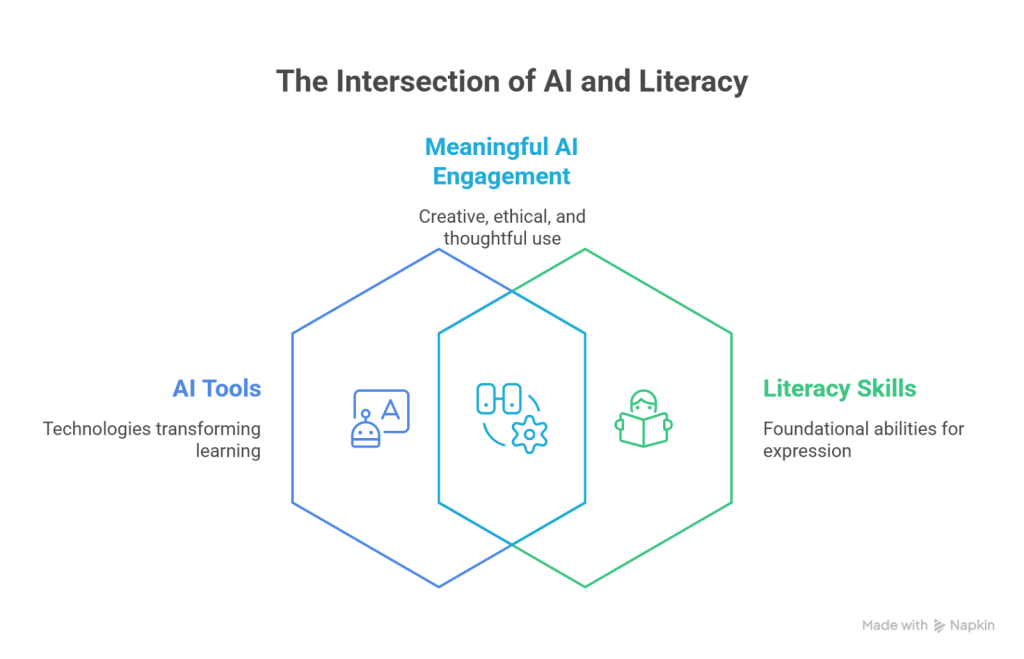
    Artificial intelligence (AI) has entered education in a big way and changed the way children (and adults) create, read and understand information. Platforms such as chatbots, translators, or “intelligent” image-generating machines have already become part of our everyday lives. But what does this mean for the way we learn? And what does it mean to be “literate” in the age of AI?

    Today, education experts do not talk about literacy only as reading and writing. Instead, they see it as something much more complex: a social, cultural, and digital practice that involves the body, emotions, technology, and interaction with others.

    This means that when a child makes a digital comic using an AI tool, they are not just “using” technology. It is participating in a process of creating meaning – that is, it is trying to express itself, to make sense of the world, to connect with others.

    AI tools don’t work passively. Instead, they generate ideas, influence our choices, and suggest words or images. This means that AI actively participates in the creation of meaning. This is why many researchers now speak of AI as a “co-author”—not just an assistant.

    This has implications:

    • Whose voice is that?
    • Which ideas come first?
    • What data does the machine “learn” and from whom?

    Not all AIs are the same and do not always work “fairly”. Many studies have shown that algorithms may reinforce uniqueness, predict different linguistic or cultural realities, or even indirectly reinforce stereotypes. This is why it is important to acquire not only “skills in using AI”, but also a critical understanding:

    • Who made this tool?
    • How does it work?
    • What does it exclude or ignore?

    Today, even in pre-school, children are getting in touch with AI. Games, educational apps and even digital assistants like Alexa are already used in classrooms. Researchers say children can learn basic ideas around AI – e.g. what it means “a program learns from examples”.

    The question is how to design these experiences in a creative, safe, and critical way and how teachers will be supported to understand and integrate such technologies without fear or confusion.

    AI opens up new possibilities for learning, but it also brings challenges. Rather than rejecting or accepting it uncritically, we need a balanced approach:

    • Understanding how it works,
    • Discuss its implications,
    • And create new ways of literacy where humans and machines work together responsibly.

    Bhatt, I. (2023). Literacies and the digital university: Critical perspectives and contemporary practices. Routledge.

    Bhatt, I., & de Roock, R. (2013). Capturing the sociomateriality of digital literacy events. Research in Learning Technology, 21(0). https://doi.org/10.3402/rlt.v21i0.21281

    Burnett, C., & Merchant, G. (2020). Undoing the digital: Sociomaterialism and literacy education. Routledge.

    Burnett, C., Merchant, G., Simpson, A., & Walsh, M. (2014). Making New Literacies Research in Classrooms: Digital Literacies and Children’s Learning. English Teaching: Practice & Critique, 13(1), 5–20.

    Burnett, C., & Merchant, G. (2016). Literacy-as-event: Accounting for relationality in literacy research. Journal of Literacy Research, 48(3), 297–317. https://doi.org/10.1177/1086296X16665383

    Hawley, R. (2022). Towards reflective entanglements in the use of AI in education. In Postdigital Science and Education, 4, 362–381. https://doi.org/10.1007/s42438-021-00283-2

    Jandrić, P., & Ford, D. R. (Eds.). (2022). Postdigital ecopedagogies: Genealogies, contradictions, and possibilities. Springer.

    Knox, J. (2019). What does the ‘postdigital’ mean for education? Three critical perspectives on the digital, with implications for educational research and practice. Postdigital Science and Education, 1, 357–370. https://doi.org/10.1007/s42438-019-00045-y

    Lankshear, C., & Knobel, M. (2011). New literacies: Everyday practices and social learning (3rd ed.). Open University Press.

    Nichols, S. (2022). Old and new literacies: Assembling meaning in a timespace of change. In J. Rowsell & K. Pahl (Eds.), The Routledge handbook of literacy studies (pp. 203–213). Routledge.

    Selwyn, N. (2022). Should robots replace teachers? AI and the future of education. Polity Press.Bhatt, I., de Roock, R., & Adams, J. (2024). Literacy and AI: Postdigital perspectives on co-authorship and educational authorship. Postdigital Science and Education, 6(1), 21–40.

  • The INFINITE Digital AI Repository: Open Access to the Future of Ethical AI in Higher Education

    The INFINITE Digital AI Repository: Open Access to the Future of Ethical AI in Higher Education

    As artificial intelligence (AI) continues to reshape teaching, learning, and assessment, the INFINITE Erasmus+ Project takes a pioneering step with the launch of the INFINITE Digital AI Repository — a transformative open-access platform hosted at https://infiniteoer.ucd.ie. Developed by University College Dublin (UCD) in collaboration with partners from across Europe, the repository is an innovative response to the increasing demand for trustworthy, practical, and ethical AI integration in higher education.

    A One-Stop Hub for AI Literacy and Pedagogical Practice

    The INFINITE AI Repository is more than just a content bank. It is a carefully curated, community-driven knowledge base filled with open educational resources (OERs) designed to empower educators, students, and institutions.

    “The goal is to demystify AI and give academics and learners actionable strategies and tools to embed AI in ways that are ethical, inclusive, and impactful,” said Prof. Eleni Mangina.

    Resources range from AI tool tutorials and guidelines to curated collections of MOOCs, PDFs, online training tools, and more. The platform emphasizes reusability, offering materials in modular formats under open licenses and in accessible file types — making integration into any learning environment seamless.

    Choosing the Right Tool: Why Omeka Classic?

    UCD conducted a thorough analysis of available repository platforms, including DSpace and Fedora, before selecting Omeka Classic for its simplicity, visual flexibility, and user-friendly interface. Designed for scholars, librarians, and educators, Omeka offers a powerful combination of rich metadata support, item tagging, and exhibit building.

    “We needed a platform that could house diverse digital formats while allowing users to browse, search, and contribute with ease,” said Dr. Levent Görgü.

    Collections That Speak to Modern AI-Driven Classrooms

    The INFINITE repository currently houses six themed collections:

    • Online AI Tools
    • PDFs
    • Guidelines
    • Books
    • Online Training
    • MOOCs

    With over 22 searchable tags and a growing database of categorized content, users can quickly locate materials tailored to their instructional or learning needs. From enhancing AI literacy to showcasing real-life examples of AI applications in education, the repository fosters both awareness and skill-building.

    Community Engagement and Usability First

    Following a live demonstration at the INFINITE project meeting in February 2025, partner feedback played a critical role in refining the platform. Enhancements included links to the INFINITE Digital Hub and Project Website, the addition of HTTPS security, and usability improvements.

    User feedback highlighted features like:

    • The AI Literacy Toolkit
    • Intuitive search and filtering tools
    • Clear categories and free access to curated tools

    “The practical nature of the tools is what stands out”, commented one participant. “They’re clearly explained, directly applicable, and incredibly useful for my tasks as a teacher.”

    Building a Lasting Legacy for AI in Education

    The INFINITE AI Repository will remain active for at least five years after the project’s end, ensuring long-term access to its growing content base. As part of the broader INFINITE Erasmus+ mission, the repository is set to become a key reference point for educators and institutions navigating AI’s role in higher education.

    Whether you’re a university lecturer exploring ethical AI assessment tools or a student looking to build your AI skills, https://infiniteoer.ucd.ie is your gateway to high-quality, purpose-driven AI education resources.

    Explore, Learn, Share

    Visit the INFINITE Digital AI Repository today and become part of a growing network of educators and learners shaping the future of AI in education.

    🔗 https://infiniteoer.ucd.ie

  • Designing with learners in mind: Exploring methods to elicit prior understandings of AI

    Designing with learners in mind: Exploring methods to elicit prior understandings of AI

    As discussed in our previous article (AI Vision in Higher Education: Toward a Critical AI Literacy at the University of Groningen), generative AI tools are increasingly present in our daily lives, shaping how we consume content and interact with technology. From personalized playlists on Spotify to video recommendations on YouTube, AI-driven systems are constantly working behind the scenes, subtly influencing our choices and behaviors.

    This growing integration of AI into everyday life is also making its way into education. More and more students—from primary school to university—are incorporating AI tools into their learning journeys. These tools are used not only to explore new topics but also to complete assignments. Popular examples include ChatGPT (OpenAI) and Gemini (Google), but also lesser-known tools such as Elicit and Gamma, which support research and content creation, respectively.

    In light of this expanding presence, there is now a broad international consensus on the urgent need to foster AI literacy (UNESCO, 2022). This includes developing educational programs that equip learners of all ages with the skills to use AI tools ethically, critically, and responsibly. However, before we can design effective and meaningful AI curricula—regardless of the educational level—it is essential to understand how learners’ make sense of artificial intelligence. Gaining insight into learners’ perceptions, expectations, and experiences with AI is crucial for informing future curriculum development and ensuring that educational approaches are relevant, inclusive, and impactful.

    A recent study by Dagmar Mercedes Heeg and Lucy Avraamidou, researchers at the Centre for Learning and Teaching at the University of Groningen, offers a compelling example of how to approach this foundational step. Their 2024 article, Young Children’s Understanding of AI, published in Education and Information Technologies, investigates how children conceptualize AI, not only from a technical standpoint but also through the lens of their everyday lives and social interactions. What makes this study particularly valuable is its emphasis on the socio-cultural dimensions of AI—framing it not just as a tool, but as a force that shapes and is shaped by human experience.

    Although the research focuses on a younger audience than the one addressed in our Erasmus+ INFINITE project, its methodology has clear potential for adaptation. The approach used to surface children’s prior conceptions of AI can inspire similar exploratory phases in professional development programs for higher education teachers and students. By starting with participants’ existing understandings, these programs can be designed to be more context-aware, relevant, and impactful.

    To structure their investigation, the authors posed three key questions:

    • How do young children understand AI?

    • How do young children understand AI applications in their daily lives?

    • What (if any) ethical risks do young children identify in relation to AI?

    To answer these questions, the study followed a qualitative case study design involving 18 primary school children between the ages of 11 and 12. Data were collected through five online group interviews, each lasting between 20 and 30 minutes. These semi-structured interviews combined open- and closed-ended questions to allow for both guided discussion and spontaneous responses. For the analysis, the authors employed a thematic approach, aiming to identify which AI literacy constructs were most prominent in the children’s narratives. 

    Regarding their general understanding of AI, many children described it as a type of technology designed by humans that has the ability to “think” or “decide” independently. Some referred to it as an “algorithm” or an “intelligent machine” capable of learning and performing tasks on its own. These interpretations reveal how children’s notions of AI combine both factual understanding and intuitive reasoning, shaped by their interactions with digital tools.

    When reflecting on where they encounter AI in daily life, the children named a wide range of examples—most notably algorithms behind platforms like YouTube, TikTok, and Netflix. They also mentioned devices such as voice assistants (e.g., Alexa, Google Assistant), robotic vacuum cleaners, lawnmowers, and autonomous vehicles. These references show that AI, for them, is not a distant or futuristic idea—it’s part of the fabric of their daily routines.

    Interestingly, the children also demonstrated a noteworthy level of critical thinking when asked about the risks and ethical dimensions of AI. For instance, some expressed discomfort with how platforms like YouTube use their personal data for financial gain, touching on questions of digital ownership and consent. Others raised concerns about privacy, fearing that their data might be shared or exploited without their knowledge. Bias in AI systems also emerged as a common theme—all groups felt strongly that unfair or discriminatory behavior by AI should be addressed, although most struggled to explain why these biases exist or how they could be fixed.

    Taken together, the findings suggest that children’s understanding of AI is deeply connected to their everyday routines and social contexts. Rather than seeing AI purely as a technical system, they view it as something that can support and shape their actions—highlighting its socio-cultural role. Their knowledge reflects both what AI does and how it affects them—from the personalized content they receive to the data they unknowingly share. 

    So, what can we take away from this research—as members of the INFINITE consortium, but also as educators and researchers committed to developing meaningful AI training? Educational design literature consistently shows that effective curriculum development is not a linear process, but rather a complex and iterative one. Across various instructional design models—whether backward design, design-based research, or others—there is a shared emphasis on starting with learners: understanding their prior knowledge, beliefs, and experiences.

    This foundational step is crucial at all educational levels. If we want to create relevant and impactful AI literacy training for higher education teachers and students, we must first explore what they already know (or think they know) about AI. Just as the study of young learners highlighted the value of surfacing prior conceptions, we should also include this as a starting point in the design of our own programs.

    As a growing number of institutions rush to implement AI-related training and resources, let’s not lose sight of this essential first phase. Only by grounding our work in the real experiences and understandings of our learners can we ensure that AI education is not only technically sound, but also pedagogically meaningful and socially responsible.

  • THE AI DIGITAL LITERACY TOOLKIT

    THE AI DIGITAL LITERACY TOOLKIT

    Ready to harness the power of AI in your teaching and learning? We are excited to announce the release of our AI Digital Literacy Toolkit available in English, Greek, Dutch and Irish!  This free resource empowers Higher Education (HE) faculty, staff, and students worldwide to effectively integrate AI and related technologies into their professional and pedagogical practices.

    Access Toolkit

    What’s Inside the Toolkit?

    This comprehensive toolkit is designed to guide you through the exciting world of AI in education, regardless of your current level of expertise.  It provides:

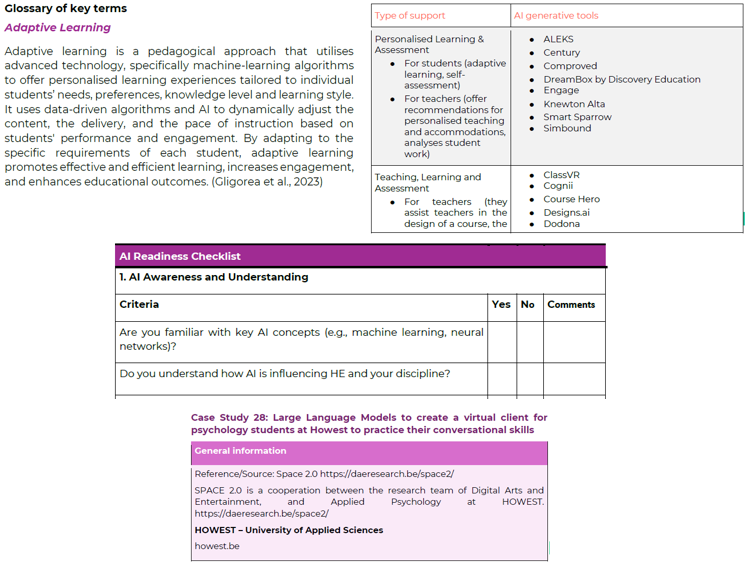
    • Clear Definitions and Foundational Knowledge:  The Toolkit is equipped with definitions of key terms and notions related to the use of AI in HE. Understanding these fundamentals is crucial for effectively leveraging AI in your teaching and ensures everyone starts with a solid foundation.  We explore the role of these advanced technologies in education, outlining both the exciting possibilities and the potential challenges.
    • Practical Guidance and Best Practices:  The toolkit goes beyond theory, offering practical guidance and best practices for integrating AI into your HE setting.  We provide real-world examples and adaptable strategies that HEIs can easily implement.
    • A Self-Assessment Checklist:  Not sure where to start? Our comprehensive checklist helps HE academics assess their current AI readiness. Identify your strengths and areas for development to create a personalised learning path.
    • A Visual Framework for Tool Selection:  Choosing the right AI tool can be overwhelming. Our visual framework simplifies the process by guiding you through the selection of the most appropriate AI-based tools for your specific professional and pedagogical needs.  

    How Will This Toolkit Benefit You?

    • Stay Ahead of the Curve: Equip yourself with the knowledge and skills necessary to navigate the rapidly evolving landscape of AI in education.
    • Unlock the Potential of AI: Discover how AI can transform your teaching and enhance student learning.

    Learn more about the INFINITE project and our mission to promote digital literacy in higher education: here

  • THE ROLE OF CHATGPT IN EDUCATION: OPPORTUNITIES, CHALLENGES, AND FUTURE PROSPECTS

    THE ROLE OF CHATGPT IN EDUCATION: OPPORTUNITIES, CHALLENGES, AND FUTURE PROSPECTS

    The integration of artificial intelligence (AI) into education is no longer a futuristic concept—it is happening now. Among the most prominent AI tools, ChatGPT has emerged as a valuable asset for both students and educators. A recent systematic literature review by Dimeli & Kostas (2024) analysed 50 empirical studies on the use of ChatGPT in school and higher education (HE) offering key insights into its applications, challenges, and impact on learning.

    How is ChatGPT Being Used in Education? 

    The study reveals that ChatGPT has found applications across various educational levels, from preschool to university education. The main ways in which students and educators are using ChatGPT include:

    •  Content Generation for Educators: Educators are leveraging ChatGPT to create quizzes, lesson plans, personalised learning materials, and even design assessment rubrics. This allows educators to save time and focus on student engagement rather than administrative tasks.
    • Personalised Learning for Students: Students use ChatGPT as a study companion to explain complex concepts, generate ideas for assignments, and practice problem-solving. In foreign language learning, for example, ChatGPT acts as a conversational partner, providing real-time feedback on writing and grammar.
    • STEM Applications: In mathematics, chemistry, and computer science, ChatGPT is used to explain problem-solving steps and assist in programming tasks like code debugging. However, it struggles with accurate numerical computations and complex calculations, necessitating additional verification.
    • Academic Writing and Research: Many university students and researchers utilise ChatGPT to enhance their writing skills, refine essays, and even develop structured research methodologies.

    Performance and Impact on Learning

    The findings indicate that ChatGPT can enhance student performance in multiple disciplines, particularly in cognitive development, critical thinking, and motivation. Key areas of positive impact include:

    • Improved cognitive performance: Students using ChatGPT in history, science, and mathematics have shown higher knowledge retention and better problem-solving skills.
    • Enhanced critical thinking skills: In subjects like world religions, physics, and research methodology, ChatGPT has been used in knowledge-building activities, encouraging deeper analysis and evaluation.
    • Boost in student motivation and engagement: Many students report that ChatGPT makes learning more interactive and helps them stay motivated, particularly in subjects that require extensive writing or conceptual understanding.
    • Advancement in AI literacy: Exposure to ChatGPT fosters AI literacy among students, preparing them for an increasingly AI-driven world.

    Challenges and Ethical Concerns

    While the benefits are clear, the study also highlights several limitations and ethical concerns associated with ChatGPT in education:

    • Accuracy Issues: ChatGPT is known to produce inaccurate, outdated, or fabricated information (“hallucinations”), making it unreliable for subjects that require precise factual knowledge.
    • Academic Integrity Risks: The tool raises concerns about plagiarism, over-reliance, and reduced original thinking among students.
    • Lack of Creativity and Emotional Intelligence: Despite its ability to generate coherent text, ChatGPT struggles with creative problem-solving, deep reasoning, and emotional expressionskills that are crucial in human-centered disciplines.
    • Bias and Ethical Challenges: AI models like ChatGPT can perpetuate biases present in their training data, leading to ethical concerns in education. Additionally, unequal access to AI tools could widen the digital divide between students with different technological resources.

    Future Research and Recommendations

    The study underscores the need for a structured approach to integrating AI in education. Researchers recommend:

    • Training students and educators in AI literacy to ensure responsible and ethical usage.
    • Developing clear guidelines on AI-generated content to protect academic integrity.
    • Enhancing AI tools to minimise biases and improve reliability.
    • Exploring AI applications in special education and underrepresented educational settings, such as primary education and informal learning environments.

    Final Thoughts

    The role of ChatGPT in education is evolving rapidly. While it offers exciting opportunities for personalised learning and teaching support, it also presents challenges that require careful consideration. By embracing AI responsibly, educators and policymakers can maximise its benefits while safeguarding ethical standards and academic integrity.

    AI in education is not a replacement for teachers but a powerful tool to enhance learning experiences. The key lies in balancing innovation with critical oversight—ensuring that AI serves as a supportive partner rather than a disruptive force in the classroom.

    And that’s where our INFINITE project comes into play to empower the HE community for the responsible use of AI in teaching, learning and assessment.

    Our six partners from Belgium, Cyprus, Greece, Ireland and The Netherlands are working together to develop:

    – An AI Literacy Toolkit and AI Digital Hub with a rich repository of resources for HE academics to make responsible use of AI for innovative teaching and assessment.

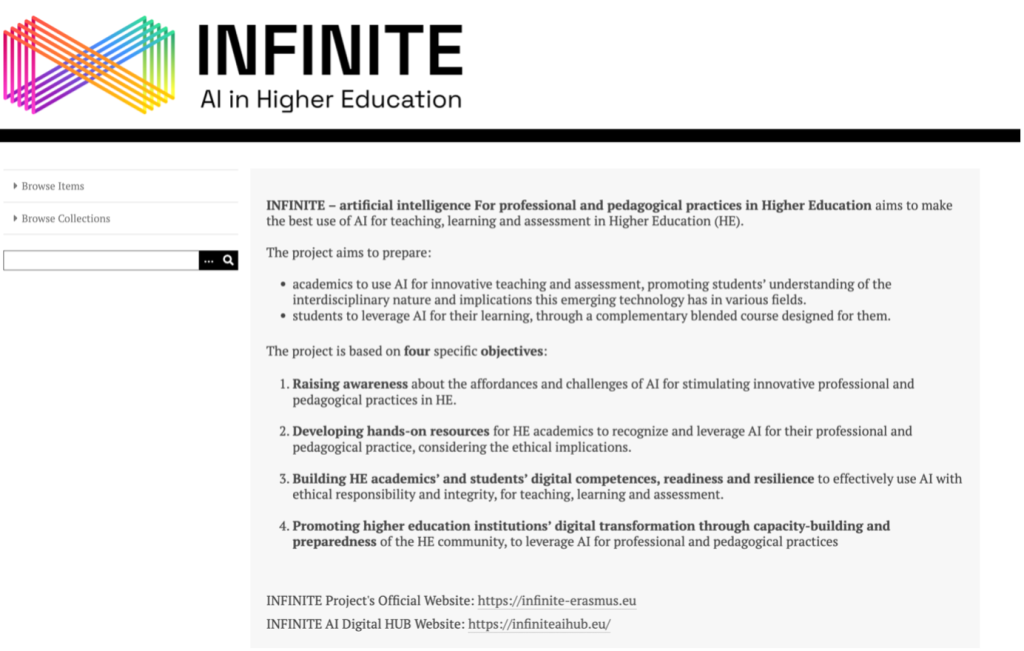
    – A complementary blended course for HE students to help their understanding of the interdisciplinary nature and implications of the use of AI.

    By building capacity and digital resilience of HE staff and students, our project aims to create a domino effect for the digital transformation of the HE sector and increase the employability of HE graduates.

    What are your thoughts on the use of AI in general and ChatGPT specifically in education? Join the conversation in the comments!

    Source: Dimeli, M. & Kostas, A. (2025). The Role of ChatGPT in Education: Applications, Challenges: Insights from a Systematic Review. Journal of Information Technology Education: Research, 24. https://doi.org/10.28945/5422

  • Best practices for AI implementation in Higher Education: How to overcome ethical and other challenges with practical solutions

    Best practices for AI implementation in Higher Education: How to overcome ethical and other challenges with practical solutions

    Introduction

    Artificial Intelligence. We have heard this phrase more than a thousand times. Conferences around the world are being organised to discuss and hear from the brightest minds and many scientists about what AI is and how we welcome it in today’s world, in technology, medicine, education, and many other fields that we can’t even imagine! Relationships, personal life, fashion, art, how to reply to your angry friend, what’s the matter with your plant and why it looks like this, and so many other aspects of life. 

    The integration of Artificial intelligence in Higher Education is another matter; it is transforming teaching, learning, and even administrative processes. AI-based tools like ChatGPT, intelligent tutoring systems, and automated grading programs are now helping universities and their people to to empower efficiency and personalise education. However, they bring ethical dilemmas, such as integrity concerns, data privacy, and biases. 

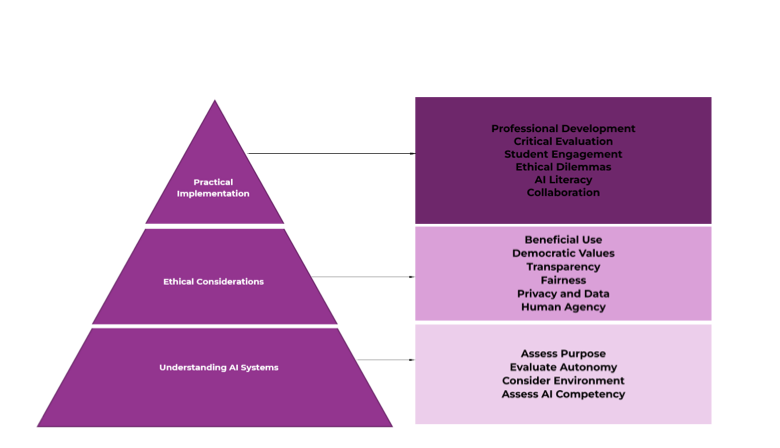
    This article explores how the adoption of AI can prevent some of these dangers by introducing best practices. It also addresses ethical and operational challenges with practical and easy solutions. Drawing from INFINITE’s AI in Education Toolkit, we provide an approach to ensuring the effective and responsible use of AI in academic settings. 

    Best Practices for AI Implementation in Higher Education 

    1. Expand AI Literacy for Students and Educators

    AI literacy is a foundational requirement for faculty and students in order to have the benefited experience of using them. Without adequate understanding, AI can be misused and relied upon uncritically. 

    Institutions should integrate AI literacy in curricula, and offer training programs for all, focusing on: 

    • The capabilities and limitations of AI tools.
    • Ethical usage and practical application with responsible interaction with the content produced.
    • Critical evaluation of AI- generated responses to secure fairness. 
    1. Ensure transparency of AI tools

    One of the most important concerns in AI use and adoption is the lack of transparency in decision-making processes. AI models, especially learning-based systems, operate as “black boxes,” which means they are not transparent about how the decision and final result were made. 

    Institutions can: 

    • Select AI tools that may provide clearer explanations of their outputs
    • Require vendors to disclose model limitations, biases, and potential inaccuracies 
    • Develop guidelines on how to interpret AI-generated content critically
    1. Promote fairness and mitigate bias in AI systems

    Bias in AI algorithms can empower existing inequalities in education and society. Some grading tools or admission systems may reflect biases in their data. 

    Institutions can and should: 

    • Audit AI systems often for bias and general incorrect or unfair outputs
    • Make sure datasets can include a broad range of student demographics and learning styles – enrich the content they input so that there is a wider aspect of evaluation
    • Use hybrid evaluation systems where humans will complement AI decisions
    1. Improve Data Privacy and Security 

    Data privacy is a significant concern in AI-driven education. In order to use AI tools, it might often be required to share personal data and information, which can be a risk related to data misuse. 

    What can Institutions do? 

    • Adopt a GDPR-compliant AI systems that protect student privacy
    • Implement strict access controls and encryption for sensitive data
    • Educate students on how their data is used and make sure they have control over their personal information and data
    1. Promote responsible AI use in Assessments and Research

    The continuous use of AI in education and universities specifically, raises concerns about integrity and authenticity. ChatGPT and other similar AI models (Gemini, CoPilot, etc.) answer exam questions, produce research summaries, or even respond to questions within the classroom settings and summarise discussions and lectures. 

    What could institutions do to mitigate this?

    • Define clear policies on AI-assisted work and distinguish acceptable and unethical use within the educational process of their curricula. 
    • Promote the use of AI for learning and highlight its role to assist students in their education progress instead of their content generation for delivery purposes.
    • Use AI- detection tools to avoid false accusations, even though these tools are not always accurate. 

    How do we address ethical challenges with practical solutions though? 

    The solution for balancing AI Innovation with academic integrity lies in the development of hybrid assessment models that can combine traditional evaluation methods with AI-powered learning tools. Instead of banning the AI world from their professional lives, educators and academics can use tools in the exact same way that they expect their students to: by having an assistant summarising and saving them time by collecting information so they can make their final decisions. The key element required for this process is to critically analyse AI-generated results. 

    To prevent overreliance on AI, metacognition and self-regulated learning have to be encouraged. For example, students may use AI-based writing tools and be required to provide personal reflections on how the AI tool(s) assisted their learning processes rather than submitting the output as their own work. 

    Human oversight can be included in decision-making processes powered by AI to face ethical dilemmas. AI should be used as a support tool rather than an autonomous decision-maker in grading, admissions, and general student performance evaluations. 

    Bias and inclusivity is a challenge that can’t be ignored. A possible way to face it is to engage students and faculty groups with diverse backgrounds in AI tool evaluation. This transparency can be very helpful in speaking out on the societal complexities that the tools can create and as a result, ensure that they cater to a wide range of educational needs. 

    Last but not least, data privacy regulations can be monitored by offering transparency on how universities and other institutions process students’ data and how they collect, store and use it in general. This offers the capability for students to have access to their data and supports their right to know how they are being used. 

    To conclude… 

    AI presents transformative opportunities in Higher Education, but its successful implementation requires a responsible approach. As with all new tools and systems that are released over the years (internet, gaming, social media platforms), with the right approach and educational support, their use can help humans have control over their professional and personal lives and not allow external concepts to decide on their behalf. 

    The INFINITE’s AI in Education Toolkit provides a comprehensive framework to guide institutions in their ethical and effective use of AI in academia. As AI continues to evolve, continuous reflection and adaptation will be necessary to align its use with educational values and expectations by and to society.

  • AI vision in higher education: Toward a critical AI literacy at the University of Groningen

    AI vision in higher education: Toward a critical AI literacy at the University of Groningen

    The digital transformation of society is not a recent phenomenon (Castells, 2024). Over the past several decades, a series of technological breakthroughs—including the internet, the World Wide Web, cloud computing, smartphones, and the Internet of Things—have profoundly influenced our daily lives. However, the release of large language models such as ChatGPT (OpenAI) and Gemini (Google) seems to have propelled digitalization into a new phase. As Lucy Avraamidou compellingly argues in her article “Can we disrupt the momentum of the AI colonization of science education”, nearly every day a new generative AI tool is advertised as promising to revolutionize different aspects of our lives (Avraamidou, 2024).

    This AI-driven revolution is already affecting multiple sectors and occupations (Fadel et al., 2024). As UNESCO (2021) notes, there are numerous well-known applications of AI, including:

    “Automatic translation between languages and automatic facial recognition—used for identifying travelers and tracking criminals—to self-driving vehicles and personal assistants on smartphones and other devices in our daily life. One particularly noteworthy area is health care. A recent transformative example is the application of AI to develop a novel drug capable of killing many species of antibiotic-resistant bacteria (Trafton, 2020). A second example is the application of AI to analyse medical imaging—including foetal brain scans to give an early indication of abnormalities, retinal scans to diagnose diabetes, and X-rays to improve tumour detection.”

    At the same time, these rapid advancements raise questions that societies worldwide must grapple with. What will AI’s impact be on the labor market? Will its adoption enhance human well-being, or could it exacerbate inequalities? How does the significant energy consumption associated with AI influence climate change? Which ethical and moral concerns must we consider when we implement AI at scale?

    In the field of education—particularly in higher education—these discussions are especially vibrant. Some take a technopositive view, asserting that AI could solve a host of educational challenges. Others are more cautious, highlighting the potential pitfalls and risks. While debates are occurring at both academic and societal levels, the scientific literature outlines four possible scenarios for how AI might affect higher education (van Slyke et al., 2023):

    1. Minimal impact: AI tools do not significantly alter teaching or professional practices in higher education. Both students and faculty continue to rely on traditional methods, maintaining the status quo.
    2. AI as a tool (automation): AI automates routine tasks—such as generating exercises, grading assignments, or writing code—freeing up time for more value-added activities. However, the core educational model remains largely unchanged.
    3. AI as a trusted partner (augmentation): AI becomes a collaborative partner. Students, educators, and professionals interact with AI tools that function as tutors, coaches, or co-creators. This scenario fosters the co-evolution of learning processes and encourages greater creativity by combining human ingenuity with AI capabilities.
    4. AI as a competitor: AI tools replace certain roles traditionally held by educators or professionals, diminishing their demand. Here, faculty take on secondary roles, such as curriculum design and mentoring, while students learn primarily through “AI educators.” In this model, teachers become “co-learners” who work alongside students.

    Although we do not yet know which scenario will prevail, it is increasingly clear that higher education urgently needs the competencies to engage with AI responsibly. This has led to a growing emphasis on AI literacy for both students and educators, regardless of academic level. Yet a fundamental question arises: is any AI literacy sufficient, or should we focus on fostering a critical AI literacy that prioritizes social, ethical, and moral considerations?

    A helpful illustration of good practice can be found at the Centre for Learning and Teaching (CLT) within the Faculty of Science and Engineering (FSE) at the University of Groningen. In October 2023, the CLT initiated a strategic vision on integrating AI into educational contexts. A consultation group of 33 participants—including six student representatives—drew insights from FSE’s six educational clusters and eight research institutes. Two sessions were held to discuss real-world cases within FSE, identify the teaching staff’s needs, and refine a strategic vision draft. The outcome of this effort was the “AI Literacy Vision Document,” now publicly available (link).

    This vision document addresses how to integrate AI tools into teaching and research in a critical and responsible manner. It advocates for critical AI literacy, defined as the competencies required to evaluate, communicate with, and work alongside AI technologies in scientific and engineering contexts. While offering an overarching strategy based on current research, the document also recognizes that disciplinary differences demand distinct approaches. Accordingly, it provides guidelines for designing courses and programs aligned with FSE’s strategic goals, particularly those related to innovation and social impact.

    Among its key themes, the vision document calls for balancing AI’s potential benefits with its risks—ranging from bias and ethical pitfalls to the potential erosion of human-centric interaction. Active learning is emphasized, encouraging educators to draw on students’ prior experiences with AI as part of a broader, more intentional instructional design. Core values such as equity, transparency, accountability, and ethical use of AI are likewise underscored, forming a foundation for maintaining academic integrity as AI-based tools become more widespread.

    Yet these strategic outlines should be treated as guiding compasses that must ultimately lead to concrete action. In other words, we must go a step further and translate critical AI literacy into actual training programs. Here is where Erasmus+ and related educational innovation initiatives become indispensable. For example, the Centre for Learning and Teaching, in partnership with the University of Nicosia, University College Dublin, the University of the Aegean, All Digital, and CARDET, is undertaking a project whose main objective is:

    “To pepare Higher Education (HE) faculty to critically and ethically exploit AI-based technology in their professional and pedagogical practices, thereby helping Higher Education Institutions (HEIs) leverage the best possible outcomes from AI developments.”

    At the time of writing, this consortium has already created an AI Literacy Toolkit, which presents best practices that higher education institutions can easily adopt or adapt, and an AI Digital Hub that (1) makes a variety of AI tools, digital resources, and European data accessible for innovative teaching and learning, and (2) offers a centralized repository of AI-related tools and Open Educational Resources (OERs) to help the higher education community remain informed about the latest advancements. The next step is the development of a formal training program for both educators and students, through which the principles of critical AI literacy will become even more actionable and meaningful.

    In conclusion, higher education stands on the cusp of a transformative moment, one in which many stakeholders have vested interests. It is vital to bear in mind that the shape AI adoption ultimately takes depends on collective decisions made by educators, students, administrators, and policy-makers. AI is here to stay; how we harness it will determine its value for society at large. By engaging with these technologies critically, ethically, and proactively, we can ensure that AI becomes an ally—rather than a threat—in the pursuit of quality education, social equity, and human well-being.

  • Empowering Personalized Learning In Higher Education: The Role Of AI And The LEADER AI Toolkit

    Empowering Personalized Learning In Higher Education: The Role Of AI And The LEADER AI Toolkit

    As higher education continues to evolve in response to digital transformation, Artificial Intelligence is emerging as a key enabler of more personalised, flexible, and inclusive learning experiences. By leveraging data-driven insights and adaptive technologies, AI has the potential to tailor education to individual learner needs, supporting diverse learning pathways and improving student outcomes.

    Within this context, the LEADER AI Project introduces the LEADER AI Toolkit, a practical resource designed to support educators and institutions in integrating AI into teaching and learning processes. The toolkit, available at https://leaderai.eu/toolkit/, provides guidance, tools, and frameworks to help higher education professionals harness AI in a pedagogically meaningful and ethically responsible way.

    The LEADER AI Toolkit focuses on enabling personalised learning by supporting key areas such as adaptive instruction, learner analytics, and targeted feedback. Through these approaches, educators can better understand students’ needs, monitor progress, and provide customised support that enhances engagement and academic success. At the same time, the toolkit promotes critical awareness of ethical considerations, including data privacy, transparency, and fairness in AI-driven systems.

    Beyond technical implementation, the initiative emphasises the importance of capacity building. By equipping educators with the knowledge and skills required to use AI effectively, the toolkit contributes to strengthening digital readiness within higher education institutions. This is particularly relevant in a context where educators are increasingly expected to navigate complex technological environments while maintaining high standards of teaching quality and inclusivity.

    The LEADER AI Toolkit represents a valuable contribution to the ongoing transformation of higher education, offering a structured and accessible approach to integrating AI into personalised learning practices. By bridging the gap between innovation and pedagogy, it supports institutions in creating more responsive, student-centred learning environments aligned with the demands of a rapidly changing digital society.