
Author: Dea Kralj

  • INFINITE… Coming to the end and looking toward the future

    INFINITE… Coming to the end and looking toward the future

    Thirty months have passed since the beginning of this ambitious project, which officially started on December 1st, 2023. Six organisations from across Europe – University of Groningen,  University of Nicosia,  University College Dublin,  University of the Aegean, All Digital and  CARDET – decided to join forces with a shared objective: to prepare Higher Education faculty to critically and ethically use AI-based technologies in their professional and pedagogical practices, while supporting Higher Education Institutions to achieve the best possible outcomes from current AI developments.

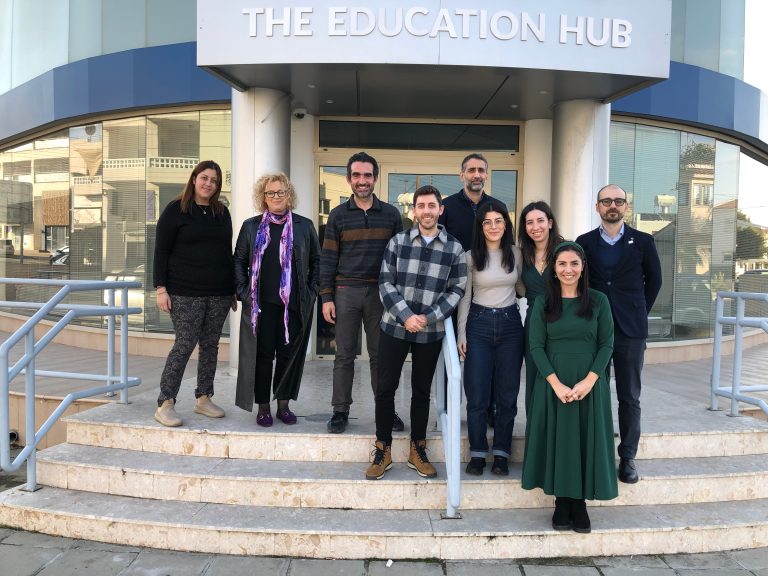
    The project officially started in Cyprus, where CARDET organised the kick-off meeting of the consortium. During those first days together, the partners had the opportunity not only to discuss the foundations and objectives of the project, but also to establish collaborative relationships and define the first ideas that would guide the next thirty months of cooperation.
    This common vision brought the consortium together throughout the entire project and guided the development of several important outcomes and initiatives.

    One of the first milestones was Work Package 2, titled “INFINITE – AI Literacy Toolkit”. This work package aimed to raise awareness about both the opportunities and challenges associated with AI in higher education, compare national and European needs related to AI integration, and provide higher education academics with practical guidelines and ethical recommendations for the use of AI tools in teaching and professional practices. At the same time, it sought to support the digital transformation of higher education institutions through a more informed and responsible use of AI technologies.

    After extensive collaboration, continuous discussions, and several revision processes to ensure the quality of the work developed, the consortium achieved two main outcomes:

    • A desk and field research report mapping the landscape of AI in higher education (link)

    • The AI Literacy Toolkit, including 35 best-practice case studies, a readiness checklist, and a visual framework designed to help higher education academics become familiar with AI tools and critically select them for professional and pedagogical practices (link)

    The next important milestone was Work Package 3, titled “AI Digital Hub”. The objective of this work package was to create a digital space for collaboration, innovation, and knowledge-sharing related to AI use in teaching, learning, assessment, and professional practices in higher education. More specifically, the AI Digital Hub aimed to support higher education academics in understanding the potential, limitations, and current developments of AI technologies through accessible resources and updated information.

    The final AI Digital Hub was composed of two main elements:

    • A repository of AI tools and Open Educational Resources (OERs), including tutorials, documentation, and practical examples to support academics in exploring AI tools for educational and professional purposes.

    • An observatory on AI developments and trends, designed to monitor and analyse current AI-related research, reports, ethical discussions, European policies, and innovations connected to higher education.

    The results of this Work Package can be found here: link.

    Finally, the consortium arrived at Work Package 4, titled “AI Capacity Building and Courses”, which became one of the most important and practical dimensions of the whole project. This work package focused on creating hands-on learning opportunities for both higher education academics and students to develop AI literacy skills and learn how to integrate open-source and freeware AI tools into their educational practices in an ethical and responsible way.

    In addition, classroom implementations were organised in several partner countries, where higher education instructors who had participated in the “AI Capaity Building and Courses”integrated the acquired knowledge and best practices into real educational settings. These implementations contributed to extending the impact of the project beyond the consortium itself and generated new examples of responsible and ethical AI integration in higher education classrooms.

    The results of this Work Package can be found here: link.

    Although dissemination activities were continuously developed throughout the entire duration of the project, one of the final dissemination efforts involved the organisation of national dissemination workshops in each partner country. These workshops aimed to familiarise key stakeholders with the objectives, resources, and outcomes of the project, while also creating opportunities for educators, researchers, and students to explore the developed materials and discuss the future of AI in higher education.

    As it is often said, every beginning has an ending. The final stage of the project took place during the INFINITE Final Conference (April 23rd, 2026), organised as a full-day event combining presentations, panel discussions, workshops, poster sessions, and networking activities.

    The conference started with an international panel discussion focused on the role of AI in education and its implications for sustainable futures. Following the panel, participants attended two rounds of breakout workshops dedicated to exploring the main outputs of the project, including the AI Literacy Toolkit, the AI Digital Hub, and the AI capacity-building courses. Participants also had the opportunity to discuss practical examples, share experiences, and collectively reflect on the opportunities and challenges that AI currently brings to higher education.

    The event concluded with a poster session, informal discussions, and networking opportunities among participants from different countries and institutions.
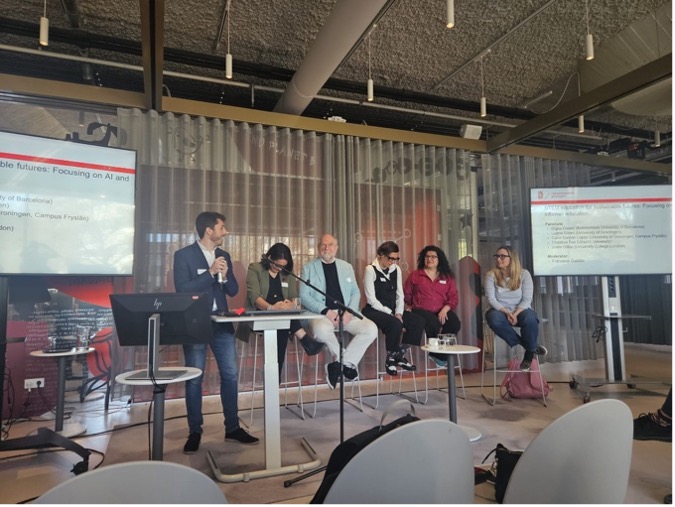
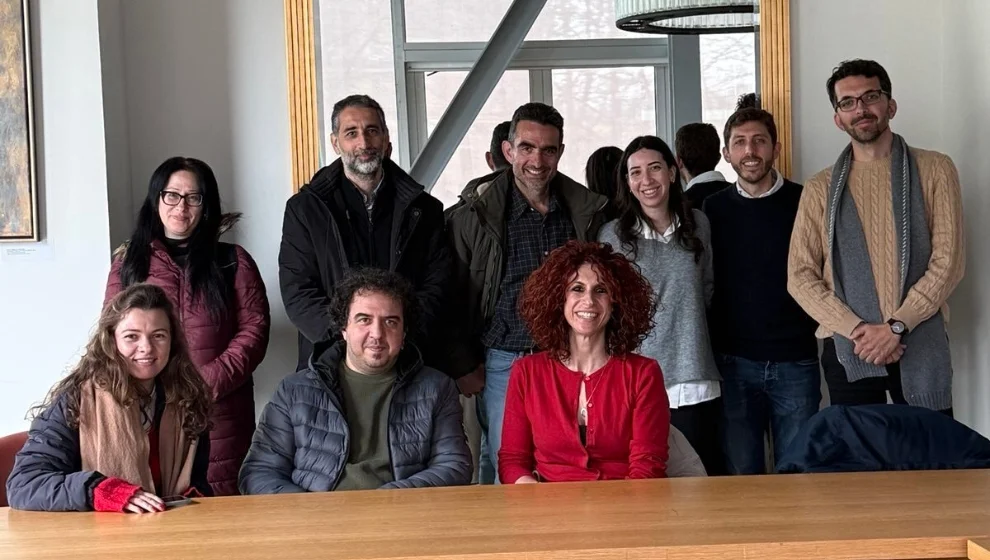
    After the final conference, one idea became especially clear for all the partners involved: this is not truly the end of the collaboration, but rather the beginning of future joint projects and new initiatives between these European institutions.

    We sincerely hope that the outcomes developed within the INFINITE project will continue supporting lecturers, researchers, students, and higher education institutions across Europe in approaching AI in a more critical, ethical, and pedagogically meaningful way.


  • Synergies and Collaborations Strengthen INFINITE Project Impact

    Synergies and Collaborations Strengthen INFINITE Project Impact

    Throughout the lifecycle of the INFINITE Project, we have established valuable synergies with different initiatives, including:

    • Emerging Technologies for Holistic Literacy in Adult Education (ETHLAE) project aiming to tackle the challenge of integrating emerging technologies into adult learning and education, striving to enhance literacy and learning outcomes across diverse adult education contexts.
    • Ongoing collaboration with the Media & Learning Association (MLA). MLA is dedicated to advancing education by strategically incorporating media and digital technologies at all educational levels. Their mission focuses on empowering educators, students, and institutions with the skills necessary to effectively utilise digital tools and media in teaching and learning. With a strong emphasis on extended reality (XR), artificial intelligence (AI), and digital media literacy, MLA supports the development of best practices in higher education and teacher training.
    • Another relevant synergy was established with the TINKER Erasmus+ project (https://tinker-project.eu/). TINKER focuses on improving informatics education in schools through authentic learning approaches, connecting theory with real-life tasks. It also promotes gender-inclusive teaching practices, aiming to address the underrepresentation of women and gender minorities in the field and to create more inclusive and diverse learning environments.
    • INFINITE has established a synergy with the ongoing Erasmus+ KA2 project GREENDALE (Green Dimension) project supports the integration of sustainability skills into higher education courses and internships across various disciplines, using the EU’s Green Competences framework. Both projects aim to transform higher education teaching and learning by augmenting into the curriculum new innovative frameworks.
    • INFINITE is part of a clustering initiative between Erasmus+ projects which was established during the InfoDay “The University of the Aegean as a bridge connecting to Europe”.

    Through this partnership, we aim to promote and foster innovation in pedagogical approaches, enhance media literacy strategies, and align with the European Union’s vision of digitally enabled education. Together, we are committed to combating disinformation, sharing resources, and inspiring creative solutions to improve teaching practices across Europe.

  • New Resource Available: INFINITE Action Plan on Ethical and Sustainable AI Integration in Higher Education

    New Resource Available: INFINITE Action Plan on Ethical and Sustainable AI Integration in Higher Education

    INFINITE project has officially published its Action Plan for the integration of Artificial Intelligence (AI) in Higher Education Institutions (HEIs), offering a research-informed and strategically grounded framework to support institutions in transitioning from isolated AI experimentation towards sustainable, systemic, and ethically responsible implementation.

    Developed by All Digital and the University of the Aegean, this Action Plan is based on the AI Capacity Building and Courses Transnational Report available on the INFINITE project website: link. The document reflects emerging european discussions on digital transformation in higher education and responds to the growing need for institutions to establish coherent approaches to AI governance, pedagogy, assessment, and professional development.

    Rather than approaching AI as a purely technological innovation, the Action Plan frames AI integration as a multidimensional institutional transformation process requiring alignment between governance structures, educational practices, infrastructure, and ethical frameworks.

    The publication identifies several structural barriers currently limiting meaningful AI adoption within higher education, including fragmented implementation, uncertainty regarding institutional policies, insufficient staff preparedness, and the absence of assessment models adapted to AI enabled learning environments.

    To address these challenges, the Action Plan proposes a set of interconnected strategic priorities centred around:

    • Institutional governance and policy development for responsible AI use
    • Critical AI literacy and competence-based professional development
    • Pedagogically grounded integration of AI into teaching and learning practices
    • Process-oriented assessment redesign aligned with AI assisted learning realities
    • Ethical reflection on bias, transparency, privacy, sustainability, and academic integrity
    • Secure and compliant institutional AI infrastructures and tool ecosystems
    • Communities of practice supporting interdisciplinary collaboration and long term capacity building

    A key contribution of the document lies in its emphasis on critical AI literacy rather than tool-specific technical training alone. The Action Plan argues that higher education institutions should prioritise the development of transferable competences such as critical judgement, ethical reasoning, reflective practice, and the capacity to evaluate AI outputs within disciplinary contexts. While also highlighting the importance of assessment redesign in response to the widespread availability of generative AI technologies. Traditional output-focused assessment models are increasingly challenged by AI assisted content generation, requiring institutions to adopt approaches that foreground reasoning processes, transparency, documentation of AI use, and critical reflection.

    Furthermore, the Action Plan positions ethics as a foundational dimension of AI integration rather than an additional consideration. Drawing on findings from the INFINITE pilot implementations, the document demonstrates that engagement with ethical dilemmas surrounding AI, including algorithmic bias, data protection, environmental implications, and academic integrity, significantly enhances learner and educator engagement.

    The proposed implementation model follows a phased approach, beginning with institutional preparation and governance development, followed by pilot experimentation, scaling and institutionalisation, and continuous monitoring and sustainability measures.

    Importantly, the publication aligns with broader European priorities on trustworthy AI, digital education, and responsible innovation. It contributes to ongoing discussions surrounding the future role of AI in higher education systems and offers HEIs a practical yet adaptable framework for embedding AI within institutional strategies while safeguarding academic quality and human centred learning.

    The INFINITE Action Plan is now publicly available and represents an important resource for universities, educators, policymakers, and higher education stakeholders seeking to develop coherent and sustainable AI integration strategies.

    The full Action Plan can be accessed through the INFINITE project website, results section: https://infinite-erasmus.eu/results/

  • Beyond the hype developing meaningful AI literacy in Higher Education

    Beyond the hype developing meaningful AI literacy in Higher Education

    The rapid development of Artificial Intelligence (AI) has created both excitement and apprehension across global academic landscapes. This web article explores the transition from technical experimentation to digital fluency, drawing insights from the blended courses and real-classroom implementations of AI scenarios that were recently developed as part of Work Package 4 of the INFINITE (https://infinite-erasmus.eu/) Erasmus+ project. By moving beyond the initial “hype”, institutions can develop deep, sustainable AI literacy among both faculty and students.

    The Power of Scenario-Based Learning

    One of the most effective ways to integrate AI into Higher Education (HE) is through scenario-based pedagogy. This approach is grounded in the pedagogical tradition that emphasises constructivism and experiential learning, as theorised by authors such as Jean Piaget and Lev Vygotsky (Della Volpe, 2024).

    According to Piaget, learning is an active process occurring through the interaction between the individual and their environment. Similarly, Vygotsky highlights the importance of social context, arguing that knowledge is acquired through dialogue and collaboration. Scenario-based learning applies these principles by creating environments that require active participation, placing students in complex situations where they must solve problems and make decisions. (Della Volpe, 2024)

    Hence, rather than teaching AI as a standalone technical subject, embedding it within these real-world academic or professional challenges allows learners to:

    • Move beyond technical experimentation: In line with Piaget’s “active process”, participants transition from simply “playing” with tools to making reflective, informed decisions based on specific goals.
    • Contextualise AI use: By applying AI to specific tasks—such as digital presentations creation, or research—the technology becomes a relevant partner in the learning process, facilitating the “interaction with the environment”.
    • Reduce barriers to adoption: Using “discipline-neutral” scenarios that are easily adaptable helps faculty quickly customise AI activities for their specific subjects. This enhances the collaborative environment Vygotsky advocated, without requiring a deep computer science or IT background.

    The Ethics-First Approach

    A critical pillar of developing long-term AI readiness is the systematic embedding of ethical reflection. Rather than being treated as a separate, theoretical topic, ethics should be integrated in AI-related activities. This includes:

    • Critical Evaluation: Developing the ability to assess AI-generated outputs for accuracy, reliability, and potential algorithmic bias.
    • Academic Integrity: Establishing clear guidance to help students understand the boundaries between “AI-assisted” work and “AI-generated” work.
    • Responsible Data Practices: Promoting an awareness of data privacy and intellectual property.

    Building Long-Term Capacity

    Evidence from the INFINITE project implementations suggests that a blended approach—combining self-paced online learning with face-to-face collaborative application—creates the strongest foundation for AI readiness. While asynchronous courses provide the necessary theoretical framework, in-class sessions offer the pedagogical depth needed for peer discussion and real-time troubleshooting.

    To sustain this growth, HE institutions must view AI literacy not as a one-time training session, but as a continuous journey of development. As technology evolves, they must ensure that the academic community remains both technically skilled and critically aware.

    References

    Della Volpe, V. (2024). Scenario-Based Learning: An Inclusive Methodology. Journal of Research & Method in Education14(6), 1-5.

  • From Training to Transformation: A Transnational Overview of AI Capacity Building and Courses in INFINITE

    From Training to Transformation: A Transnational Overview of AI Capacity Building and Courses in INFINITE

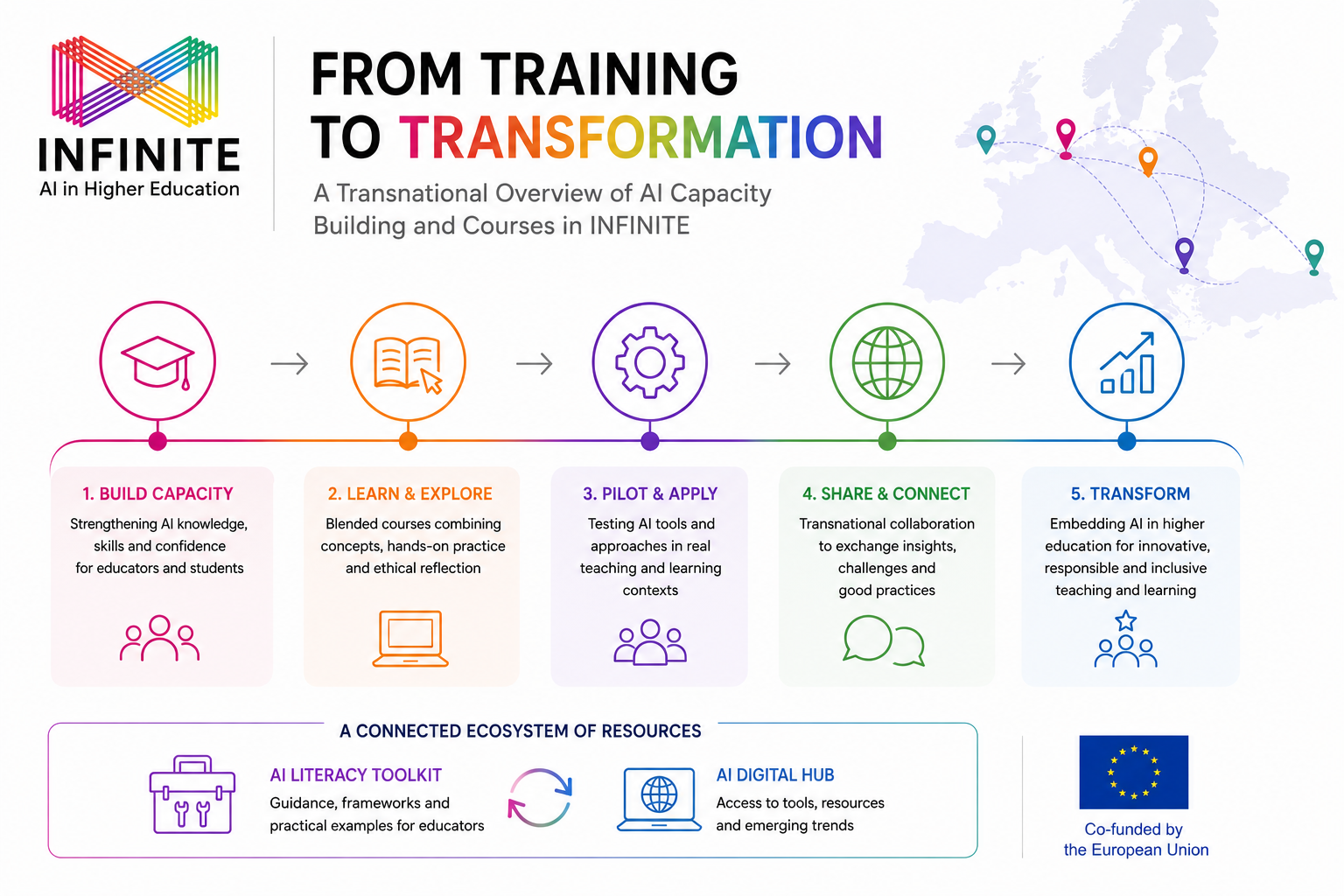
    As Artificial Intelligence (AI) continues to reshape higher education, institutions across Europe are gradually moving beyond initial curiosity and experimentation. The question is no longer whether AI should be used, but how it can be integrated in ways that are meaningful, responsible, and pedagogically sound.

    Within the INFINITE project, the work on WP4: AI Capacity Building and Courses responds directly to this challenge. By bringing together experiences from multiple European countries, it focuses on equipping educators and students with the knowledge, skills, and confidence needed to engage with AI in real educational contexts.

    Across the project, dozens of educators and students from partner institutions participated in training and pilot activities, contributing to a rich, practice-based understanding of how AI can be applied in higher education.

    Building Capacity Across European Contexts

    The activities were implemented across diverse institutional and national environments, including the Netherlands, Greece, Ireland, Cyprus, and Belgium, involving participants with different levels of familiarity with AI. Some were already experimenting with AI tools in their teaching, while others were being introduced to the topic for the first time.

    Despite these differences, a shared need quickly became evident. Educators and students alike are looking for structured support that goes beyond theory—support that helps them understand how AI can be used in practice, within the realities of higher education.

    The transnational dimension played a key role here. By working across these different contexts, the project was able to identify common challenges and priorities, while also benefiting from a variety of perspectives and approaches.

    From Learning About AI to Using It

    At the core of this work are the blended courses developed for higher education academics and students. These courses were designed to move beyond abstract discussions of artificial intelligence and focus instead on its practical application in teaching and learning.

    Participants consistently highlighted the value of this approach. The combination of conceptual understanding with hands-on exploration allowed them to better grasp both the potential and the limitations of AI tools. Whether in designing course activities, supporting student learning, or reflecting on assessment practices, the courses provided a space to experiment and reflect.

    Importantly, the courses also addressed the ethical dimension of AI. Participants were encouraged not only to use AI tools, but to question them—considering issues such as transparency, bias, and responsible use.

    Learning Through Piloting and Practice

    A key strength of the activities lies in their implementation in real educational settings. The courses were piloted within higher education institutions, allowing participants to directly apply what they were learning.

    This practical engagement proved essential. It enabled educators to test new approaches in their teaching and gave students the opportunity to interact with AI tools in authentic learning environments. As a result, feedback was grounded in real experience rather than hypothetical scenarios.

    As one participant noted:

    I will incorporate them into my course.

    This simple statement reflects a crucial outcome of the work—not just awareness, but actual intention to apply the project results in practice.

    Common Insights Across Countries

    While the implementation contexts differed, several shared insights emerged from the transnational experience.

    There is a strong and consistent demand for practical guidance. Participants are not looking for more information about AI in general, but for concrete examples, frameworks, and resources that can be applied immediately.

    At the same time, the importance of ethics and critical thinking was emphasised across all contexts. AI is seen not just as a technological tool, but as a factor that influences decision-making, teaching practices, and learning processes.

    Finally, the experience highlighted the role of institutions. Individual motivation and interest are high, but long-term impact depends on institutional support. Integrating AI into higher education requires not only training, but also strategic alignment and continuous professional development.

    A Connected Ecosystem of Resources

    The work on AI Capacity Building and Courses is closely connected with other key results of the INFINITE project. The AI Literacy Toolkit provides structured guidance and practical examples for educators, while the AI Digital Hub offers access to tools, resources, and emerging trends.

    Together, these elements form a coherent ecosystem that supports both learning and implementation. Training is reinforced by access to resources, and exploration of tools is guided by pedagogical and ethical considerations.

    Looking Ahead

    The transnational experience confirms that higher education institutions are ready to engage with AI, but also underlines the need for continued support.

    Moving forward, the focus will be on strengthening practical application, expanding training opportunities, and supporting institutions in embedding AI into their practices. The transition from experimentation to systematic integration is already underway.

    In this context, the work on AI Capacity Building and Courses represents an important step—demonstrating how collaboration across countries can support meaningful and responsible innovation in higher education.

    Ultimately, it reflects a broader shift: from understanding artificial intelligence as a concept, to actively shaping its role in education.

  • Rethinking AI in Higher Education: Is It Really Just a Tool?

    Rethinking AI in Higher Education: Is It Really Just a Tool?

    Artificial intelligence (AI) is rapidly becoming part of everyday life in higher education. It helps students write, supports teachers in preparing materials, and promises to make learning more efficient. But what if AI is more than just a helpful tool?

    In her paper “AI is not a tool”, Nataliia Laba (2025) challenges this common assumption and invites us to think more critically about how AI shapes creativity, knowledge, and learning. For the INFINITE project, this perspective is especially important, not just how we use AI, but how we understand it.

    The story behind AI

    AI is often introduced with a familiar promise. It will make things faster, easier, and more creative. But this promise is built on a powerful narrative. First, human effort or creativity is framed as limited. Then, AI is presented as the solution. Finally, concerns are dismissed as resistance to inevitable progress. 

    This way of thinking makes AI feel essential, but also leaves little room for critical reflection.

    When creativity changes

    Traditionally, creativity in education is about exploration, effort, and learning through doing. AI, however, can shortcut this progress. With just a few prompts, students can generate results instantly. 

    While this can be useful, it raises an important question: if we remove the effort from learning, what happens to the learning itself?

    The risk is not that AI replaces creativity, but that it reshapes how we value it.

    AI is not neutral

    AI systems are not simply tools. They reflect the data, assumptions, and priorities of those who build them. This means they shape how knowledge is produced and presented. 

    In higher education, this matters. AI can influence what perspectives are visible, how ideas are formed, and how students engage with knowledge. Recognising this is essential for using AI responsibly.

    Looking beyond the future

    AI is often framed as the future of education, constantly improving and full of potential. But focusing only on the future can distract from present challenges, such as bias, environmental impact, and the changing nature of academic work. 

    For universities, the key is to engage with AI critically now, not later.

    The role of INFINITE

    This is where INFINITE plays an important role. The project goes beyond simply promoting the use of AI. It encourages a deeper understanding of what AI means for education.

    By supporting educators and students to think critically about AI, INFINITE helps shift the focus:

    – From efficiency to meaningful learning

    – From adoption to reflection

    – From tools to systems that shape knowledge

    A more thoughtful way forward

    Seeing AI as “just a tool” is easy, but incomplete. AI is influencing how we learn, create, and think.

    By recognising this, higher education can take a more thoughtful approach. This means balancing innovation with critical awareness.

    Projects like INFINITE are key to this process, helping ensure that AI supports learning without redefining its core values.

    Reference:

    Laba, N. (2025). AI is not a tool. AI & Society. https://doi.org/10.1007/s00146-025-02784-y

  • INFINITE Closes with Two Days of Reflection, Innovation, and Collaboration in Groningen

    INFINITE Closes with Two Days of Reflection, Innovation, and Collaboration in Groningen

    23–24 April 2026 Groningen, Netherlands

    The Erasmus+ funded INFINITE project officially concluded with a two day final event in Groningen, the Netherlands, bringing together academics, educators, researchers, and students from across Europe to reflect on the role of Artificial Intelligence in higher education and to celebrate the project’s achievements.

    Hosted by the University of Groningen, the event combined a public Final Conference on 23 April with the project’s Final Transnational Partner Meeting on 24 April. Over 70 participants attended the event, fostering collaboration and exchange.

    A Final Conference Focused on AI and Sustainable Education

    The first day took place at the House of Connections and was co-organised with the Up-STEAM project under the theme STEM Education for Sustainable Futures, strengthening synergies.

    The conference opened with an expert panel moderated by Mohammad Gharesifard and Francisco Castillo from the University of Groningen. Speakers included Justin Dillon, Digna Couso, Christine Fox, Luana Silveri, and Carol Garzón López. Discussions explored AI, informal education, and sustainable futures in STEM learning. 

    The afternoon programme featured parallel breakout sessions where participants engaged with the main outputs developed through the INFINITE project, including:

    • The AI Literacy Toolkit
    • The AI Digital Hub
    • AI capacity building courses for higher education

    The event concluded with a poster session and networking reception, creating space for participants to exchange ideas, discuss future collaboration, and explore the project resources in an informal setting.

    Feedback from participants highlighted strong interest in the project’s outputs and a high level of satisfaction with the conference programme.

    Consortium Meeting Marks the Official Closing of the Project

    On 24 April, consortium partners gathered at the Linnaesbourg building of the University of Groningen for the project’s Final TPM.

    During the meeting, partners reviewed and formally concluded the project’s five work packages:

    • WP1: Project Management, Quality Assurance, and Evaluation led by University of Groningen and CARDET
    • WP2: AI Literacy Toolkit presented by UNIC
    • WP3: AI Digital Hub presented by University College Dublin
    • WP4: AI Capacity Building Courses presented by University of the Aegean
    • WP5: Dissemination and Sustainability led by All Digital

    The afternoon focused on sustainability planning, with partners discussing how the project’s tools, resources, and networks can continue supporting higher education institutions beyond the Erasmus+ funding period.

    The meeting closed with a final round of reflections from all partners and a social dinner celebrating the conclusion of the project and the collaboration developed throughout its implementation.

    Throughout its implementation, the INFINITE project worked to strengthen AI literacy and support higher education institutions in navigating the growing role of Artificial Intelligence in teaching and learning.Its main resources, including the AI Literacy Toolkit, AI Digital Hub, and AI capacity building courses, will remain openly accessible for educators, institutions, and learners across Europe, ensuring that the project’s impact continues well beyond its formal conclusion. Moreover, Action Plan and Sustainability Plan are currently being developed by partners, ensuring the widest uptake of the project results.

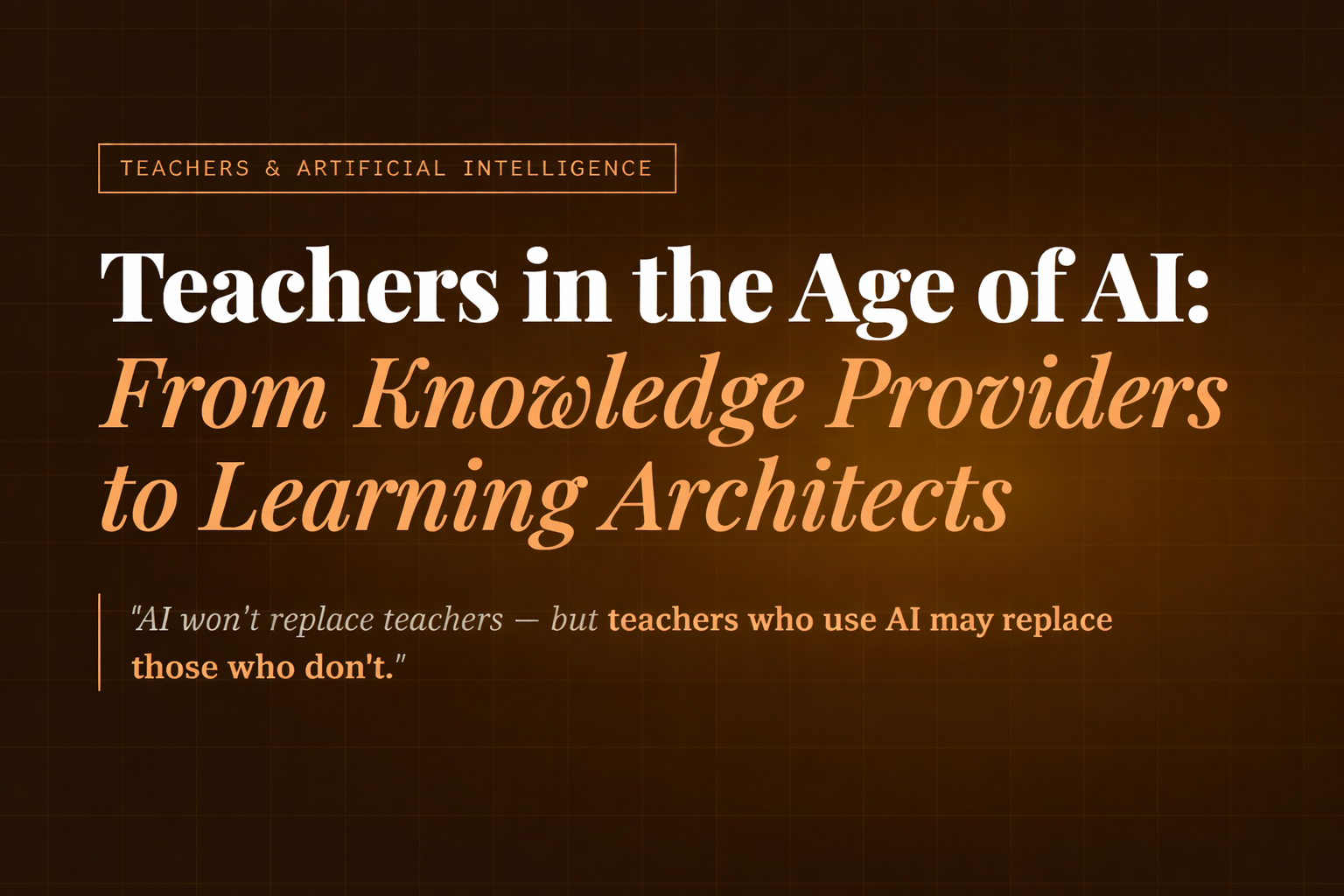
  • Teachers in the Age of AI: From Knowledge Providers to Learning Architects

    Teachers in the Age of AI: From Knowledge Providers to Learning Architects

    “AI won’t replace teachers — but teachers who use AI may replace those who don’t.

    For centuries, the teacher occupied an almost sacred role: the custodian and transmitter of knowledge. That archetype is dissolving — not because teachers have become less important, but because artificial intelligence is rapidly absorbing the parts of teaching that were, in truth, always mechanical. [1] What remains — and what AI cannot replicate — is the irreducibly human work of guiding curiosity, nurturing critical thought, and holding the ethical line. The classroom of 2025 does not need a teacher who knows everything. It needs one who knows how to build an environment where students can think.

     ‘’The more compelling narrative is not AI automating education, but teachers working with AI to craft transformative learning experiences.’’

    World Economic Forum, 2025 [1]

    The Automation Opportunity — and Its Shadow

    The productivity gains are real and already in motion. [1] Roughly 60% of teachers now use AI tools in their classrooms to handle routine tasks — grading multiple-choice assessments, tracking progress, generating practice exercises — freeing time for deeper instructional work. [1] The global AI in education market is projected to leap from $5.18 billion in 2024 to $112.3 billion by 2034. [1] Yet automation carries a shadow risk: that teachers begin to cede the judgement, care, and accountability that make education meaningful. UNESCO’s 2024 AI Competency Framework for Teachers warns explicitly that over-reliance on AI could cause educators to lose key professional competencies if they delegate too heavily to algorithmic systems. [3]

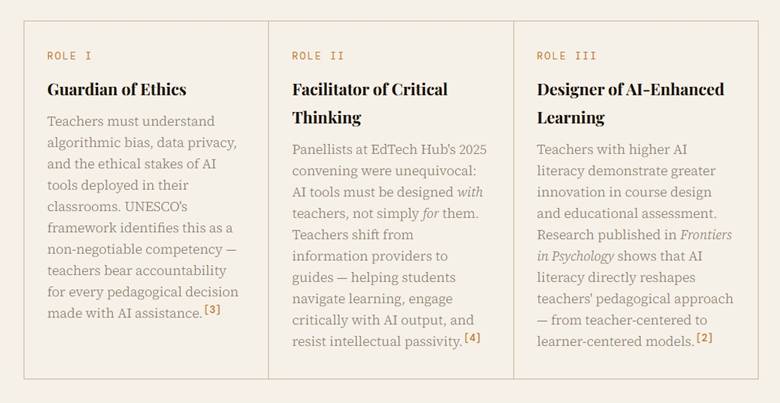
    Three Roles Teachers Must Now Own

    As AI absorbs the transactional, teachers are stepping into three defining roles — each one distinctly human in character.

    The Competencies That Cannot Wait

    UNESCO’s AI Competency Framework for Teachers — launched in September 2024 — defines five dimensions every educator must develop: a human-centred mindset, AI ethics, foundational AI knowledge, AI pedagogy, and professional AI learning. [3] These are not optional electives. Research from the European Journal of Teacher Education (2025) confirms that nearly half of self-reported digitally literate teachers have still not integrated AI into their practice, underscoring a knowing-doing gap that professional development must close. [5]

    Teachers also need what no framework can fully script: the moral imagination to ask whether an AI tool should be used before asking how. As the World Economic Forum has observed, teaching involves far more than imparting information — AI should augment, never replace, the teacher’s role. [6]

    The 21st-century teacher is, above all, a learning architect — someone who designs conditions in which human minds grow, integrates AI as a powerful but subordinate instrument, and keeps ethics at the centre of every choice. The transition is demanding, but the invitation is extraordinary: to become not less essential in an age of AI, but more deliberately, more irreplaceably human.

    Sources & References

    1. World Economic Forum. (2025, January). How AI and human teachers can collaborate to transform education. weforum.org
    2. Frontiers in Psychology. (2025, October). Promoting teaching innovation among university teachers through AI literacy from the perspective of planned behavior. frontiersin.org
    3. UNESCO. (2024). AI Competency Framework for Teachers. unesdoc.unesco.org
    4. EdTech Hub. (2025, May 21). AI Tutors and Teaching: How Might the Role of the Teacher Change in an Age of AI? edtechhub.org
    5. Heine, S. & König, J. (2025). Applying artificial intelligence in teacher education: preservice teachers’ attitudes and reflections in using ChatGPT for teaching and learning. European Journal of Teacher Education, 48(5). tandfonline.com
    6. World Economic Forum. (2024, April). The future of learning: AI is revolutionising education 4.0. weforum.org
  • Developing Meaningful AI Literacy in Higher Education

    Developing Meaningful AI Literacy in Higher Education

    The rapid development of Artificial Intelligence (AI) has created both excitement and apprehension across global academic landscapes. This web article explores the transition from technical experimentation to digital fluency, drawing insights from the blended courses and real-classroom implementations of AI scenarios that were recently developed as part of Work Package 4 of the INFINITE (https://infinite-erasmus.eu/) Erasmus+ project. By moving beyond the initial “hype”, institutions can develop deep, sustainable AI literacy among both faculty and students. 

    The Power of Scenario-Based Learning 

    One of the most effective ways to integrate AI into Higher Education (HE) is through scenario-based pedagogy. This approach is grounded in the pedagogical tradition that emphasises constructivism and experiential learning, as theorised by authors such as Jean Piaget and Lev Vygotsky (Della Volpe, 2024). 

    According to Piaget, learning is an active process occurring through the interaction between the individual and their environment. Similarly, Vygotsky highlights the importance of social context, arguing that knowledge is acquired through dialogue and collaboration. Scenario-based learning applies these principles by creating environments that require active participation, placing students in complex situations where they must solve problems and make decisions. (Della Volpe, 2024) 

    Hence, rather than teaching AI as a standalone technical subject, embedding it within these real-world academic or professional challenges allows learners to: 

    • Move beyond technical experimentation: In line with Piaget’s “active process”, participants transition from simply “playing” with tools to making reflective, informed decisions based on specific goals. 
    • Contextualise AI use: By applying AI to specific tasks—such as digital presentations creation, or research—the technology becomes a relevant partner in the learning process, facilitating the “interaction with the environment”. 
    • Reduce barriers to adoption: Using “discipline-neutral” scenarios that are easily adaptable helps faculty quickly customise AI activities for their specific subjects. This enhances the collaborative environment Vygotsky advocated, without requiring a deep computer science or IT background. 

    The Ethics-First Approach 

    A critical pillar of developing long-term AI readiness is the systematic embedding of ethical reflection. Rather than being treated as a separate, theoretical topic, ethics should be integrated in AI-related activities. This includes: 

    • Critical Evaluation: Developing the ability to assess AI-generated outputs for accuracy, reliability, and potential algorithmic bias. 
    • Academic Integrity: Establishing clear guidance to help students understand the boundaries between “AI-assisted” work and “AI-generated” work. 
    • Responsible Data Practices: Promoting an awareness of data privacy and intellectual property. 

    Building Long-Term Capacity 

    Evidence from the INFINITE project implementations suggests that a blended approach—combining self-paced online learning with face-to-face collaborative application—creates the strongest foundation for AI readiness. While asynchronous courses provide the necessary theoretical framework, in-class sessions offer the pedagogical depth needed for peer discussion and real-time troubleshooting. 

    To sustain this growth, HE institutions must view AI literacy not as a one-time training session, but as a continuous journey of development. As technology evolves, they must ensure that the academic community remains both technically skilled and critically aware. 

    References 

    Della Volpe, V. (2024). Scenario-Based Learning: An Inclusive Methodology. Journal of Research & Method in Education14(6), 1-5.